Artificial Intelligence (AI) is reshaping how we handle money. From budgeting apps that learn your habits to robo-advisors that tailor portfolios, automation promises precision where human emotion fails. But the most alluring promise comes from AI trading bots—software designed to buy and sell assets faster and “smarter” than humans ever could.
The question, however, is simple: can these bots actually make you rich—or are they just another high-tech gamble?
This article dives into what AI trading bots are, how they work, what’s real, and what’s marketing hype.
This article is for informational and educational purposes only. It does not constitute financial, investment, or trading advice. The information presented reflects general market knowledge as of the publication date and may not apply to individual circumstances.
What Exactly Are AI Trading Bots?
AI trading bots are computer programs that analyze financial data—like stock prices, trends, and market sentiment—to make trading decisions automatically. They use machine learning algorithms, neural networks, and sometimes natural language processing (to scan financial news or social media).
In plain terms: they look for patterns that historically led to profits and execute trades when similar conditions appear.
Common bot types include:
- Trend-following bots: Trade based on momentum and price direction.
- Arbitrage bots: Exploit price differences between exchanges.
- Market-making bots: Constantly buy and sell to profit from small spreads.
Some are DIY scripts; others are part of professional-grade tools like MetaTrader AI modules, 3Commas, or TradeSanta.
How the “AI” in Trading Actually Works
True AI trading bots don’t “guess” — they learn.
They are trained on massive datasets of historical price movements and then tested on real or simulated markets. The algorithm identifies complex correlations, such as how trading volume, volatility, and sentiment might combine to signal future price action.
But here’s the critical truth: markets are not stationary systems. A pattern that worked in 2023 may fail in 2025. The AI model’s intelligence is limited by its training data—it can’t predict black swan events, new regulations, or collective human panic.
So while bots can outperform humans in stable markets, they can also amplify losses when the unexpected happens.
Why People Are Drawn to AI Trading
The appeal is easy to understand:
- No emotions.
- 24/7 trading.
- Instant reactions to data.
- Backtesting before using real money.
Add a sleek dashboard and a few marketing claims like “AI predicts 85% of trends,” and the dream of passive wealth becomes irresistible.
But emotion-free doesn’t mean risk-free. Many traders forget that automating a flawed strategy doesn’t make it smart—it just loses money faster.
Can AI Trading Bots Really Make You Rich?
In short: they can help you profit—but not guarantee riches.
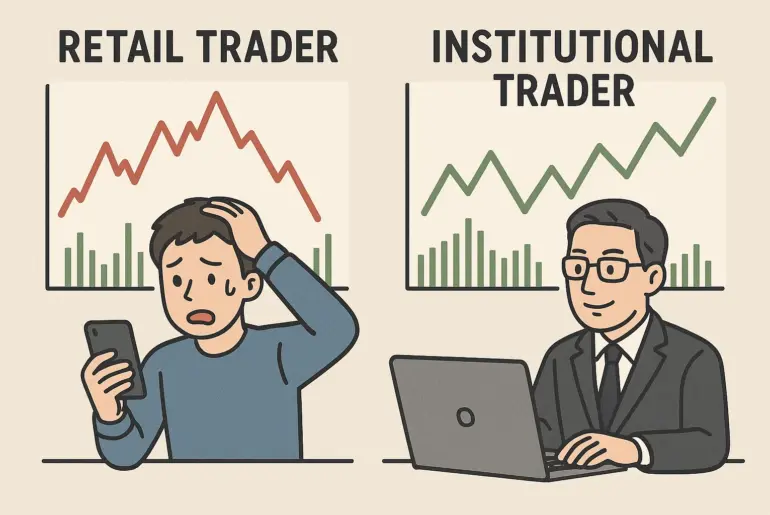
The most successful use of AI in trading comes from institutional investors, not retail users. Hedge funds like Renaissance Technologies and Two Sigma deploy vast AI systems trained by data scientists, operating with access to petabytes of data and microsecond trade execution.
Retail traders, on the other hand, often rely on off-the-shelf bots or subscription services. These may use simplified models, limited data, and lack adaptive learning.
The result: bots that can make small, consistent returns—until a major market swing wipes out the gains.
So yes, AI can assist your financial growth—but it’s a tool, not a magic money printer.
How to Use AI Trading Safely
If you want to explore AI trading responsibly, follow these core principles:
- Start small. Test with demo accounts or small capital to observe performance.
- Understand your bot’s logic. Don’t trust algorithms you can’t explain.
- Diversify. Never rely on one bot, one asset class, or one platform.
- Use stop-loss and risk controls. Automation without limits is financial roulette.
- Stay updated. Markets evolve; so should your model.
And always remember: if a service promises guaranteed profits, it’s a red flag. AI isn’t clairvoyant—it’s probabilistic.
Where AI Trading Shines
Despite its risks, AI trading does have real advantages:
- Speed and precision: Bots can analyze thousands of signals per second.
- Scalability: They can manage multiple strategies simultaneously.
- Emotion-free execution: No panic selling, no greed-fueled overtrading.
- Data integration: AI can combine technical, fundamental, and sentiment data for better insight.
These strengths make AI trading a useful assistant, especially for investors who blend automation with manual oversight.
Where AI Trading Fails
AI trading falters when:
- Market conditions shift suddenly.
- Models are overfitted (too tailored to past data).
- Traders use bots without understanding how they work.
And crucially: most bots are not truly intelligent — they’re rule-based automations with limited adaptation. Full artificial general intelligence (AGI) in trading doesn’t exist yet.
The Verdict: Smart Tool, Not Shortcut
AI trading bots are incredible innovations, but they don’t remove the need for financial literacy. They’re best used to enhance decision-making, not replace it.
You can make money using AI—but only if you treat it like a disciplined trader, not a gambler chasing easy wins.
Conclusion
AI will keep evolving, and with it, the landscape of personal investing. Automated trading will become smarter, more accessible, and possibly safer—but not foolproof.
If you’re curious about experimenting with AI in your investment journey:
- Start with learning, not earning.
- Test before trusting.
- Use AI as a tool, not a crutch.
FAQs
1. Are AI trading bots really profitable?
AI trading bots can be profitable under certain conditions — especially in stable markets and when properly monitored. However, most retail traders lose money because they rely on preset algorithms without adjusting them for changing conditions. Success depends on data quality, risk management, and human oversight, not just automation.
2. Is it safe to let an AI bot trade for me?
It depends on the platform and your understanding of how it works. Reputable bots use secure APIs and allow risk controls like stop-loss settings. But handing over full control to an unverified or “guaranteed-profit” service is risky. Always research the provider, use small amounts first, and never invest money you can’t afford to lose.
3. What’s the difference between AI trading bots and traditional algorithms?
Traditional trading algorithms follow fixed rules — for example, “buy if the moving average crosses X.” AI bots, by contrast, learn from data. They can adapt strategies based on new trends, price patterns, or even sentiment analysis. But while AI is more flexible, it’s not infallible: it can misinterpret noise as signal or fail when markets behave unpredictably.