Web design has always been about storytelling through structure and color. But something new is stirring in the designer’s toolkit—a silent collaborator powered by algorithms and neural networks. Artificial intelligence is no longer a novelty or a background process; it’s becoming a creative partner. Instead of replacing designers, AI is expanding their reach, transforming web design from a technical discipline into a co-creative process between human intuition and digital intelligence.
The question isn’t whether AI will influence design—it already does. The real challenge is learning how to dance with it.
The Rise of the Intelligent Assistant
Tools like Figma’s AI-powered design suggestions, Framer AI, and Uizard have changed the rhythm of creation. Designers can describe a layout in natural language—“Create a modern landing page for a fitness app”—and watch an entire interface appear in seconds. The magic isn’t just speed; it’s adaptability. These systems learn from design patterns across millions of websites, suggesting colors, typography, and layouts optimized for engagement.
Meanwhile, ChatGPT and Notion AI are scripting content directly into prototypes. Designers no longer need to stare at blank lorem ipsum blocks. They can prompt an AI to produce brand-aligned microcopy, calls-to-action, and even tone variations to test how language affects user behavior.
And for visual design? Midjourney, Runway, and Adobe Firefly turn abstract concepts into high-quality imagery that can populate wireframes in minutes. Stock photo hunting is slowly giving way to generative visual ideation.
Collaboration, Not Replacement
The fear of automation often overshadows the reality: AI is not a designer. It doesn’t feel rhythm, brand essence, or cultural nuance. What it offers is amplification. Designers who once spent hours on repetitive tasks—resizing assets, color matching, creating variants—now have time to think, experiment, and iterate.
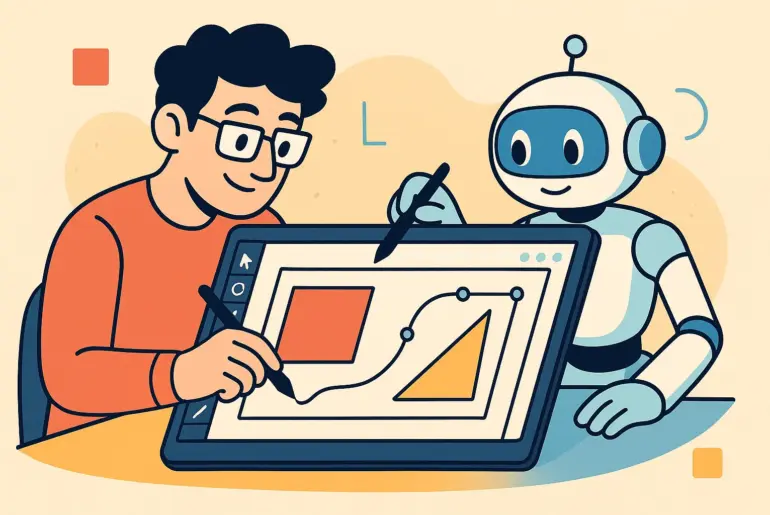
AI tools operate best when given direction, not domination. A prompt without intention produces noise. The designer’s role, therefore, is evolving from executor to curator, guiding machine creativity with human empathy. In this new workflow, intuition and algorithmic insight become equal partners.
Designing the Future Workflow
Imagine a near-future project kickoff: a designer feeds client objectives into an AI project planner. The system instantly generates mood boards, content outlines, and accessibility recommendations. It then integrates analytics predicting which layouts will best support conversion goals based on industry data.
From there, tools like Framer AI can generate prototypes that auto-adjust to performance feedback. Every iteration becomes a living experiment, informed by real user behavior rather than assumption.
The workflow of tomorrow is circular rather than linear—a continuous loop of ideation, generation, feedback, and optimization. In this model, design ceases to be a deliverable and becomes an evolving ecosystem.
The Ethical and Aesthetic Balancing Act
As AI co-creates with humans, ethical considerations deepen. Who owns an AI-generated layout? How do we maintain originality in a world where machine learning models pull from shared visual data? The answer may lie in human discernment. Designers must learn to identify when AI outputs are too derivative and when they strike new ground.
Equally important is maintaining the human signature. AI can mimic style, but it can’t originate meaning. The emotional narrative—the spark that makes users feel something—still belongs to human intuition.
The New Skill Set for Designers
The designer of the AI age is part artist, part technologist, part strategist. Beyond mastering Figma or Photoshop, they must learn prompt engineering (the craft of communicating with AI), data literacy, and ethical awareness. Knowing what to ask the AI and how to interpret its responses will define creative success more than technical prowess.
Design education is shifting accordingly. Instead of teaching static software skills, design programs now explore systems thinking and human-AI collaboration. The next generation of web designers will grow up with AI not as a tool, but as a teammate.
Conclusion: The Art of Co-Creation
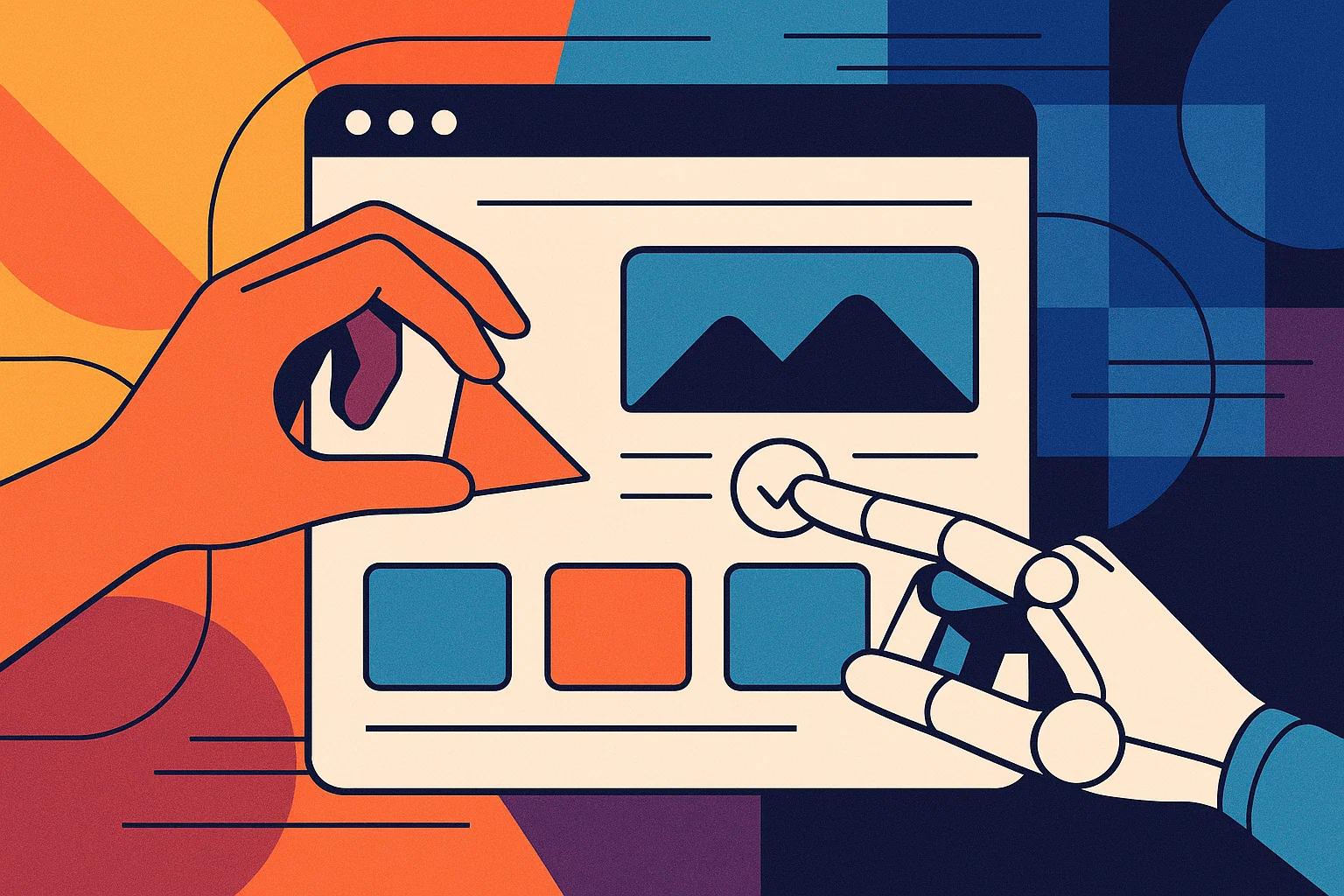
AI is not replacing the designer—it is reframing what design means. Web design is evolving from a static act of creation to a dynamic conversation between humans and intelligent systems. The best designers of the future will not fight the machine but learn to compose with it, using AI as a creative amplifier.
This is not the end of human creativity; it is its expansion. The designer’s new partner has arrived—and it doesn’t steal the brush; it helps paint the future.
FAQs
1. Will AI replace web designers?
No. AI automates repetitive and technical tasks but cannot replicate human intuition, empathy, or creativity. Instead, it expands the designer’s capabilities, allowing for faster ideation and iteration.
2. Which AI tools are most useful for web designers today?
Popular tools include Figma AI for design suggestions, Framer AI for instant prototyping, Midjourney and Adobe Firefly for image generation, and ChatGPT for writing microcopy or UX content.
3. How can designers prepare for the AI-driven future of web design?
Designers should focus on learning prompt engineering, data literacy, and human-centered design principles. The goal is to direct AI systems effectively, not to compete with them.
4. What are the biggest ethical challenges in AI-assisted design?
Ethical concerns include authorship of AI-generated content, data privacy, and maintaining originality when models are trained on shared visual databases. Designers must balance automation with authenticity.