Goal: Understand how IT has shifted from hardware-centric systems to cloud-driven architectures, and what that means for the future of infrastructure and skills.
The Legacy of Servers
In the early 2000s, enterprise IT was dominated by physical servers tucked into data centers. Each application required its own dedicated hardware, operating system, and maintenance plan. Scaling up meant buying more servers—an expensive, time-consuming process. Downtime for hardware failures or upgrades was accepted as a cost of doing business.
Traditional server environments were rigid. IT departments managed storage, networking, and compute capacity manually. This created “server sprawl,” where underutilized machines consumed energy and space.
The inefficiency of this model laid the foundation for change.
The Cloud Revolution
The concept of cloud computing—shared, virtualized resources accessible over the internet—emerged as the logical next step in IT evolution.
The rise of virtualization technologies, particularly VMware and later Hyper-V and KVM, decoupled software from hardware. This allowed multiple virtual servers to run on a single physical machine, increasing utilization and flexibility. Public cloud providers like Amazon Web Services (AWS, launched 2006), Microsoft Azure (2010), and Google Cloud Platform (2011) expanded these capabilities to global scale.
IT teams no longer needed to predict capacity years in advance—they could scale resources on demand. The cost model shifted from capital expenditure (CapEx) to operational expenditure (OpEx), giving businesses financial agility. APIs enabled automation, turning infrastructure into programmable code.
The Modern IT Landscape
Today’s IT ecosystems are hybrid by default. On-premise servers coexist with multiple cloud environments, linked through secure, high-bandwidth networks. This hybrid approach offers the best of both worlds: control and compliance for critical workloads, and scalability for dynamic ones.
Containerization—introduced by Docker in 2013 and standardized through Kubernetes—pushed this flexibility further. Applications could now run anywhere, independent of underlying infrastructure. Combined with DevOps practices, which bridge development and operations, cloud-native environments allow rapid deployment and continuous integration.
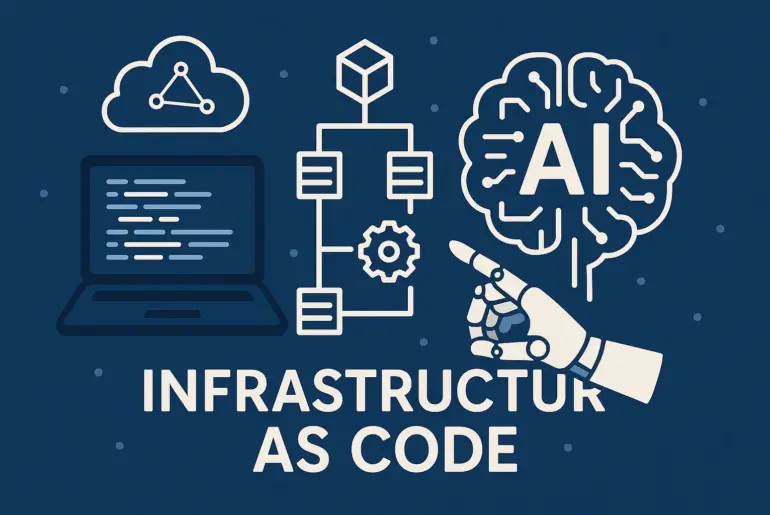
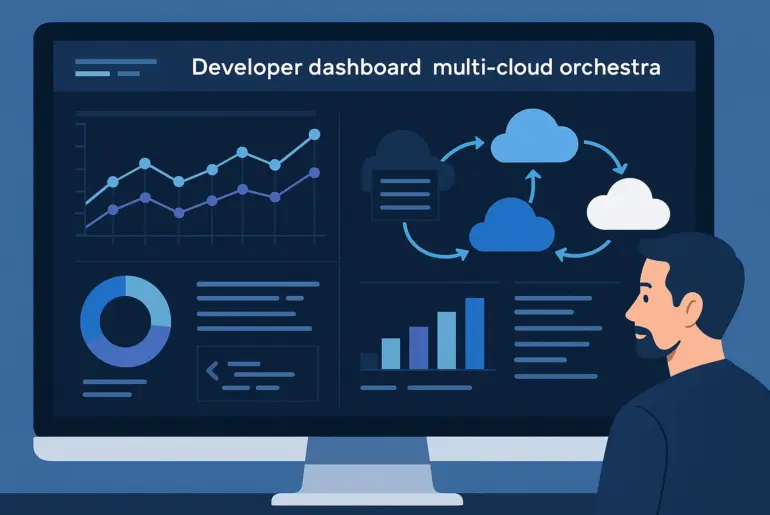
Automation tools like Terraform and Ansible make infrastructure reproducible and version-controlled, reducing human error. Monitoring systems such as Prometheus or Datadog provide real-time visibility across complex, multi-cloud setups. The role of IT has evolved from maintaining machines to managing distributed systems.
Skills and Roles in the Cloud Era
The transformation of IT infrastructure has redefined the workforce. Traditional system administrators—once experts in server configuration—are now expected to master cloud platforms, scripting, and automation.
Key emerging roles include:
- Cloud Architect: Designs multi-cloud and hybrid environments, focusing on scalability, cost efficiency, and resilience.
- DevOps Engineer: Automates CI/CD (continuous integration and delivery) pipelines and ensures consistent deployments.
- Site Reliability Engineer (SRE): Balances reliability and velocity through observability, fault tolerance, and incident management.
- Cloud Security Specialist: Ensures data integrity, compliance, and identity management across distributed systems.
Certifications from providers like AWS, Microsoft, and Google are now industry benchmarks. Yet beyond credentials, adaptability is the defining skill: cloud technologies evolve rapidly, and lifelong learning is essential.
The Next Phase: Edge, AI, and Sustainability
The cloud era is far from static. Three major trends are shaping its next evolution:
1. Edge Computing: Instead of sending all data to centralized clouds, edge computing processes it closer to the source—useful for IoT, autonomous vehicles, and real-time analytics. This reduces latency and bandwidth costs.
2. AI and Automation: Machine learning models are both hosted and trained in the cloud. Platforms such as AWS SageMaker and Google Vertex AI integrate seamlessly with data lakes, enabling scalable, distributed AI operations. IT management itself is increasingly assisted by AI-driven monitoring and predictive analytics.
3. Green Cloud Computing: As hyperscale data centers consume massive energy, sustainability has become a top concern. Cloud providers are investing in renewable energy and carbon-neutral infrastructure.
These innovations are transforming IT into a more intelligent, decentralized, and environmentally conscious ecosystem.
Conclusion: From Hardware to Horizons
In just two decades, IT has evolved from static, hardware-bound infrastructure to a dynamic, software-defined environment. The shift to cloud computing did more than change how systems are deployed—it redefined what IT means.
Today’s IT professionals are not just maintainers of machines but engineers of distributed intelligence. As cloud technologies continue to blend with AI, edge, and sustainable design, the boundaries of “infrastructure” will keep expanding—perhaps one day merging entirely with the digital fabric of society.
Stay ahead by deepening your knowledge of cloud-native architecture, automation, and sustainability. Continuous learning is the new uptime.
FAQs
1. What replaced traditional servers in IT?
Virtualization and cloud platforms replaced physical servers with scalable, on-demand computing resources.
2. Is cloud computing always cheaper than on-premise infrastructure?
Not always. While it reduces capital costs, long-term expenses depend on usage patterns, data transfer, and management practices.
3. How is edge computing different from cloud computing?
Edge computing processes data near the source to reduce latency, whereas cloud computing relies on centralized data centers.
4. What skills are most in demand for IT professionals today?
Automation, DevOps, cloud architecture, and cybersecurity are leading the demand curve.