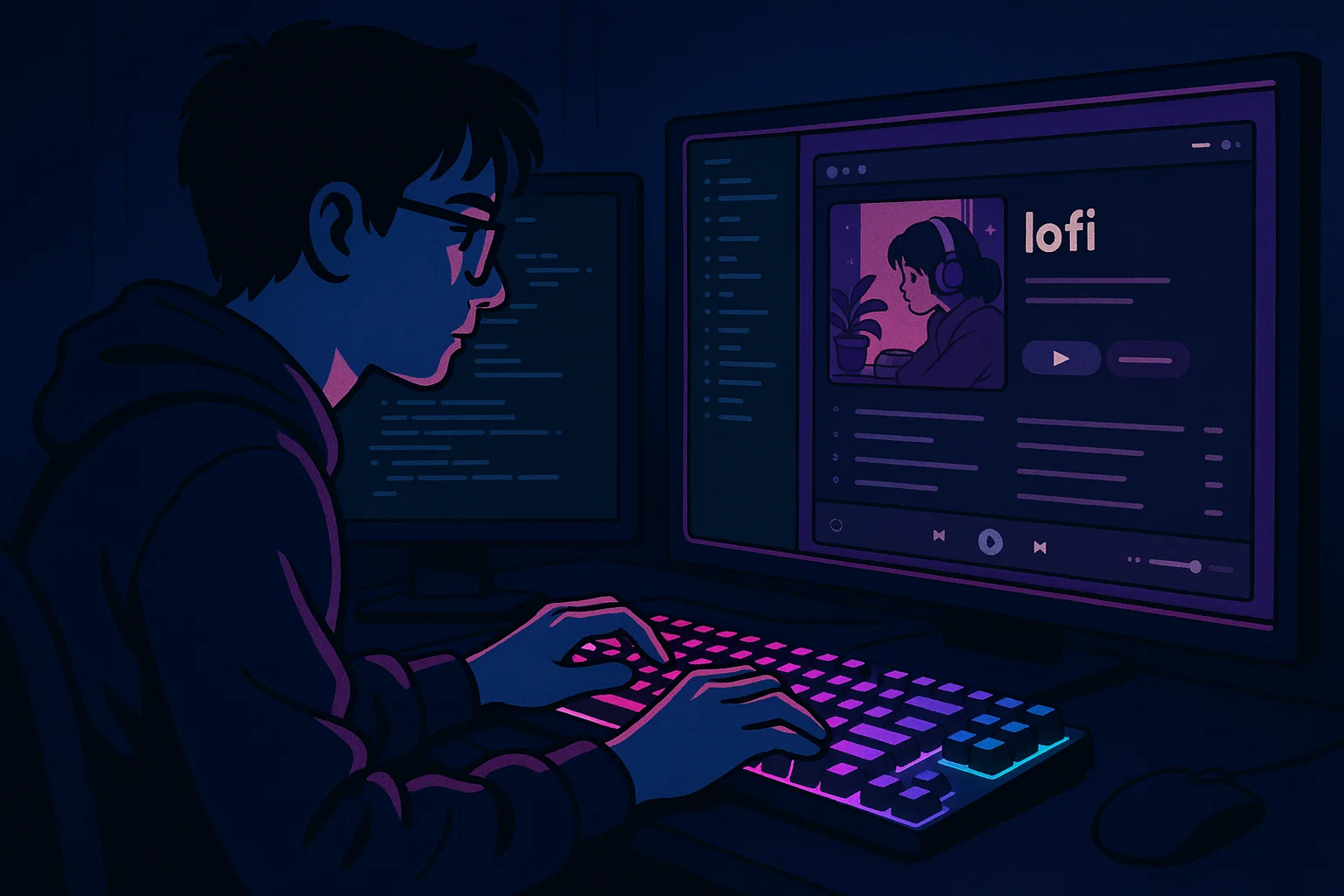
This article explores the emerging practice of vibe coding, where developers intentionally shape their coding environment with music, ambience, and rituals to enter a flow state. We’ll cover what vibe coding is, how to set up your own, the psychology behind it, and practical tutorials to make coding sessions more productive and enjoyable.
Intro: Why Coders Are Talking About Vibes
Developers love to experiment — not just with code, but with how they write code. Enter vibe coding, a term spreading through online dev communities, TikTok snippets, and GitHub discussions. It’s about setting the stage for code not just as work, but as an immersive, almost musical practice. Think of it as the intersection of software engineering, psychology, and lifestyle design.
In this article, we’ll break down vibe coding, explain why it’s catching on, and show you how to create your own personalized setup to level up both productivity and joy in programming.
What Exactly Is Vibe Coding?
Vibe coding is the practice of deliberately shaping the coding experience by aligning music, environment, mood, and tools to induce a flow state. It’s less about a rigid methodology and more about creating an aesthetic and mental atmosphere for deep, creative work.
Developers often describe vibe coding sessions as being “in the zone” — when hours pass unnoticed while code pours out smoothly. Unlike traditional productivity hacks that emphasize efficiency, vibe coding is about intentionally crafting the subjective experience of coding.
The Science of Flow: Psychology Meets Programming
The foundation of vibe coding lies in flow state psychology, a concept introduced by psychologist Mihály Csíkszentmihályi. He defined flow as a mental state where a person is fully immersed in an activity, with heightened focus and enjoyment.
In coding, flow happens when tasks balance challenge and skill: debugging a tough issue, writing elegant solutions, or experimenting with new frameworks. Vibe coding is essentially engineering flow conditions.
Elements of Vibe Coding
Music and Soundscapes
Music is the heartbeat of vibe coding. Many developers lean on lo-fi hip hop, ambient electronica, or cinematic soundtracks to sustain concentration. Others prefer algorithmically generated playlists (Spotify’s AI DJ, YouTube’s endless streams) that match the intensity of the coding task.
In practice: experiment with instrumental tracks, nature sounds, or even white noise. Avoid lyrics-heavy music if it pulls attention from coding.
Workspace Lighting and Design
Ambient lighting plays a powerful role in mood regulation. RGB setups, smart bulbs, or even a simple desk lamp with a warm glow can create an environment that signals: it’s coding time. Some coders sync lights with their music for a multi-sensory immersion.
Rituals and Break Patterns
Vibe coding isn’t a sprint; it’s about rhythm. Rituals like making tea before a session, doing a Pomodoro timer with custom chimes, or stretching at intervals anchor the practice. The ritual cues your brain to enter and exit deep work smoothly.
Tools and Environments
Text editors, IDE themes, and terminal setups contribute to the aesthetic. Dark mode with neon syntax, minimalistic fonts, or even gamified coding environments like VSCode’s Power Mode add an extra spark.
Setting Up Your Own Vibe Coding Session (Tutorial)
This is where vibe coding shifts from concept to practice.
Step 1: Define Your Coding Goal
Are you debugging, experimenting with AI models, or building a feature? Match the vibe to the type of task. High-intensity sessions call for upbeat electronic; creative brainstorming works better with ambient or classical.
Step 2: Choose Your Sound Environment
- Lo-fi beats for relaxed focus
- Synthwave for late-night energy
- Nature loops for calm debugging
- Game soundtracks (e.g., Skyrim, Minecraft) for immersive coding
Step 3: Customize Lighting & Workspace
- Use warm or dynamic lighting (Philips Hue, Nanoleaf panels).
- Declutter your desk — aesthetics matter.
- Add physical comfort (ergonomic chair, wrist rests).
Step 4: Pick the Right Tools
- Editor theme that feels inspiring (try Dracula).
- Terminal animations or startup messages.
- Extensions for live previews if working on UI-heavy projects.
Step 5: Ritualize Breaks and Energy Management
Adopt a 45-15 rule: 45 minutes of coding, 15 minutes of reset. Use breaks for walking, journaling, or simply resetting the playlist.
Examples of Vibe Coding in Action
Lo-fi GitHub Nights
Late-night sessions powered by lo-fi hip hop streams and neon-lit terminals. Ideal for side projects and creative tinkering.
Hackathon Chill Sessions
At hackathons, teams now set up shared playlists and ambient lighting to keep the energy collaborative but not frantic.
AI-Assisted Creative Coding
Pairing tools like GitHub Copilot with a calm vibe creates a hybrid mode: you focus on orchestration while the AI handles repetitive coding.
Community and Culture: Vibe Coding as a Movement
The rise of vibe coding mirrors larger trends: digital minimalism, remote work, and self-optimization cultures. On Reddit, Discord, and TikTok, coders share playlists, desk setups, and aesthetic screenshots of terminals with hashtags like #vibecoding.
It has become less about productivity for its own sake, and more about crafting an experience that feels good. In developer culture, vibe coding is almost like slow food compared to fast-food coding.
Common Pitfalls and Misconceptions
- Vibe ≠ Procrastination: Setting the mood isn’t an excuse to avoid starting. Keep prep under 10 minutes.
- Aesthetic ≠ Productivity: Cool RGB lights don’t replace actual focus.
- Flow Isn’t Permanent: Flow comes in cycles. Don’t expect 8 hours of straight immersion.
Conclusion
Vibe coding isn’t a methodology you adopt once; it’s an ongoing experiment in making programming feel alive. By combining music, environment, tools, and rituals, you can transform coding sessions from routine to immersive.
Set up a playlist, adjust your workspace, define a ritual, and code for an hour. Notice how your focus shifts. The next time someone asks how you got into flow, you can tell them: I was vibe coding.
FAQ: Vibe Coding Explained
Q: Is vibe coding just listening to music while coding?
A: Not quite. It’s about consciously shaping multiple aspects of your environment to sustain flow.
Q: Do I need expensive gear for vibe coding?
A: No. A pair of decent headphones and a simple ritual can be enough.
Q: Can vibe coding help with burnout?
A: It can help coding feel less mechanical and more enjoyable, but it’s not a cure for systemic burnout.
Q: Is there research on vibe coding?
A: Directly, no — but it builds on flow theory, music psychology, and environmental ergonomics.