For as long as humans have wrestled with the question “How do I become better?”, we’ve turned to tools and systems to guide us. From the stoic journals of Marcus Aurelius to modern self-help bestsellers stacked high in bookstores, the search for personal growth is as old as recorded history.
Now, we find ourselves at an inflection point. Artificial intelligence, once the stuff of science fiction, has slipped quietly into our pockets, homes, and workspaces. It’s analyzing our habits, reminding us of forgotten goals, and even suggesting paths for self-discovery. The pressing question is no longer if AI belongs in the self-help conversation, but how it might reshape our journey of personal growth.
Why AI Belongs in the Self-Help Conversation
Self-help has always been about feedback and guidance. A book offers frameworks, a coach gives accountability, and a meditation practice offers reflection. AI takes this to another level.
Unlike static methods, AI thrives on data. It observes behavior, identifies patterns invisible to the naked eye, and adapts its feedback in real time. That combination makes it more dynamic than a book, more available than a therapist, and more scalable than a coach.
Consider the evolution:
- Pen-and-paper journals once held our inner reflections.
- Fitness apps counted our steps and logged calories.
- Now, AI-driven apps don’t just count steps; they predict when you’re likely to skip a workout, offer motivational nudges, and adapt routines to your lifestyle.
This shift isn’t about machines replacing the human struggle for growth. It’s about amplifying our capacity to learn, reflect, and act.
AI as a Mirror for Self-Reflection
Personal growth starts with self-awareness. The ancient call to “Know thyself” remains central—but knowing yourself isn’t easy. Biases, blind spots, and rationalizations blur the view. This is where AI can function as a surprisingly effective mirror.
Journaling with AI
Traditional journaling has long been a staple of self-reflection. AI-enhanced journaling tools now analyze your entries for recurring themes: stress triggers, emotional tone, or habit loops. For example, an AI journal might highlight that every time you mention “work deadlines,” your language shifts to frustration, or that weekends consistently bring up feelings of guilt about wasted time.
The insight isn’t just in the words—it’s in the patterns. Machines excel at noticing repetition, and reflection deepens when those repetitions are brought to light.
Personality Insights
AI-driven assessments extend this mirror further. By analyzing communication styles, response patterns, or even biometric data (heart rate during stressful tasks, sleep cycles), AI can sketch a more objective portrait of your tendencies.
While no algorithm can fully capture the human psyche, the process itself encourages curiosity about who you are—and how you might change.
Building Smarter Habits with AI
Habits form the bedrock of personal development. They are the invisible architecture of daily life. But building them requires consistency, and consistency is where most self-help attempts collapse.
AI Habit Trackers
Classic habit trackers simply record whether you’ve done the thing: Did you meditate today? Did you drink enough water? AI habit trackers add intelligence. They don’t just log—they adapt. If you skip meditation three days in a row, they might shorten the session length or suggest pairing it with an existing routine.
These systems become dynamic partners, helping you adjust instead of guilting you into quitting.
Personalized Nudges
The secret weapon here is personalization. Instead of generic reminders—“Don’t forget your workout!”—AI nudges can be context-sensitive:
- If it notices you’ve had back-to-back Zoom calls, it might suggest a walk.
- If your calendar shows a stressful deadline, it might remind you to breathe.
- If your sleep tracker shows you went to bed late, it might adapt tomorrow’s productivity tips.
This responsiveness feels less like a nagging parent and more like a supportive friend who knows your rhythms.
Learning and Growth at Machine Speed
Knowledge acquisition is central to self-improvement—whether it’s learning a new language, mastering financial literacy, or developing emotional intelligence. Here, AI unlocks growth at a speed and scale that traditional methods rarely touch.
Adaptive Learning Platforms
Instead of trudging through a one-size-fits-all curriculum, adaptive learning platforms powered by AI tailor the material. Struggling with a grammar point in Spanish? The system notices and reinforces it with new exercises. Sailing through basic coding? It accelerates to advanced concepts.
The principle is simple: the right challenge at the right time keeps learning in the “flow zone”—not too easy, not too hard.
AI as a Mentor
Beyond structured courses, AI can function as a mentor. Large language models already answer nuanced questions in plain language, generate study plans, and provide feedback. In practice, this means a 24/7 mentor who never tires, never judges, and adapts to your questions.
Of course, the human element—empathy, lived experience, moral guidance—remains uniquely human. But AI expands the pool of available mentors, offering knowledge on demand.
The Risks of Outsourcing Self-Help to AI
Every tool of growth carries shadow sides. While AI opens powerful doors, it also poses risks that deserve sober attention.
Dependency
The most obvious risk is overreliance. If every decision, reflection, or habit is mediated by AI, the danger is losing the very muscle of self-discipline. Growth requires struggle, and too much outsourcing can create fragility.
Bias and Bad Advice
AI systems reflect their training data. A model steeped in biased, incomplete, or unverified information might offer poor—or even harmful—guidance. Imagine following a chatbot’s health advice that hasn’t been medically validated. Without critical thinking, blind trust in AI becomes perilous.
Privacy Concerns
Self-help often involves intimate disclosures: fears, failures, traumas. Feeding such data into an app raises sharp questions. Who has access to this data? How is it stored, monetized, or potentially breached? The promise of growth must be balanced against the cost of exposure.
The Future of AI-Driven Personal Growth
Looking ahead, it’s unlikely that AI will replace traditional self-help. Instead, the future points to hybrid models where human wisdom and machine intelligence weave together.
- Coaching Augmented by AI: A human coach may use AI dashboards to track your progress, highlight blind spots, and customize sessions.
- Personalized Self-Help Ecosystems: Imagine a personal “growth operating system” that integrates your health metrics, learning goals, financial plans, and emotional check-ins into one adaptive guide.
- The Self as Data: As AI becomes more sophisticated, our lives themselves become the training data. The feedback loop tightens: your actions feed the system, the system adapts, you respond differently, and the cycle accelerates growth.
The poetic irony is that AI might help us become more human—not less—by freeing attention from repetitive tracking and redirecting it toward meaningful action.
Conclusion
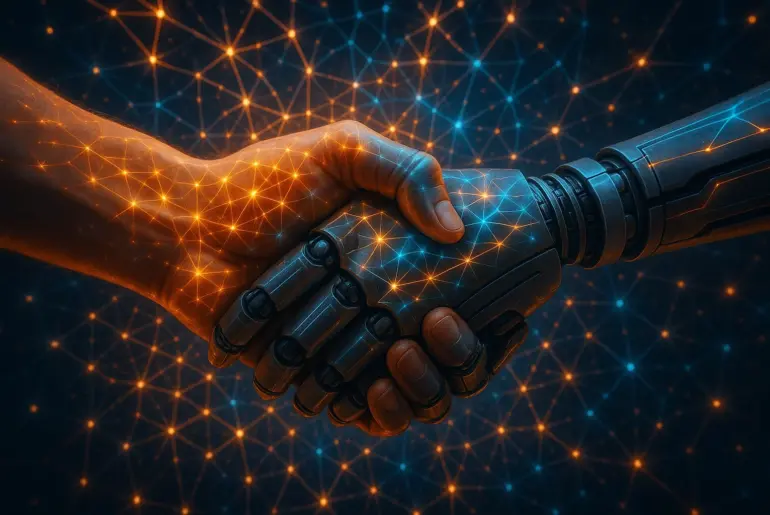
The marriage of mind and machine is neither utopia nor dystopia. It is a toolset, powerful and flawed, waiting for wise application. Artificial intelligence can illuminate patterns we miss, encourage habits we abandon, and accelerate learning we desire. But it cannot—and should not—replace the core truth: growth is a human act, requiring will, reflection, and courage.
In the end, the machine is a mirror. It can show you who you are, nudge you toward who you might become, and scaffold the journey. But the choice to step forward, stumble, and rise again belongs only to you.
Ready to take the next step in your growth journey? Join our community of curious minds and learners exploring how AI can amplify personal development. Share your story, swap insights, and discover tools that actually make a difference.
FAQs: AI and Personal Growth
1. Can AI really help me improve my habits?
Yes, but AI won’t magically change your life on its own. What it does well is track patterns, personalize reminders, and adapt to your behavior. Think of it as a supportive coach—it amplifies your efforts but can’t replace your commitment.
2. Is it safe to share personal thoughts with AI journaling apps?
It depends on the app’s privacy practices. Some store data locally or anonymize inputs, while others may use cloud services where your entries could be analyzed or even sold. Always check data policies before sharing sensitive information.
3. Will AI replace human coaches or therapists?
Unlikely. AI can provide valuable feedback, resources, and structure, but empathy, lived experience, and nuanced human judgment remain uniquely human strengths. The future will likely combine both—AI as an enhancer, humans as guides.