Cloud technology is in a state of constant reinvention. What began as a centralized infrastructure revolution in the early 2010s—dominated by AWS, Microsoft Azure, and Google Cloud—has evolved into a dynamic, distributed ecosystem. Developers today navigate a hybrid landscape shaped by multi-cloud strategies, edge computing, AI-driven automation, and a growing demand for resilient, efficient, and privacy-focused systems.
The year 2025 marks a turning point. The “cloud” is no longer a single platform—it’s an adaptive network of intelligent systems spanning public, private, and edge environments. This transition reflects both technological necessity and a philosophical shift: from scalability at all costs to smart, context-aware computing.
From Centralized Clouds to Distributed Ecosystems
The early cloud model was simple: offload your workloads to a centralized provider and scale elastically. But as global applications grew and data gravity increased, latency, privacy, and compliance started to reshape priorities.
Modern developers are witnessing a distributed cloud renaissance—where the centralization of cloud infrastructure gives way to federated and decentralized systems.
Companies like Cloudflare, Fastly, and Akamai have expanded traditional content delivery into edge compute services, enabling developers to run code geographically closer to users.
“The distributed cloud is the next logical step in reducing latency, improving security, and achieving true global scale.” — Gartner Cloud Report 2025 (gartner.com)
This evolution also introduces new complexity: distributed state management, multi-location observability, and orchestration across hundreds of edge nodes. The developer’s toolkit must now handle not just APIs and VMs, but real-time synchronization, data sovereignty, and adaptive deployment models.
The Rise of Multi-Cloud Strategies
Vendor lock-in used to be an accepted cost of convenience. Now, it’s a strategic liability. Enterprises increasingly adopt multi-cloud strategies, distributing workloads across multiple providers to maximize resilience, performance, and regulatory compliance.
In practice, this means developers need fluency across AWS Lambda, Azure Functions, Google Cloud Run, and open-source tools like Kubernetes, Terraform, and Crossplane.
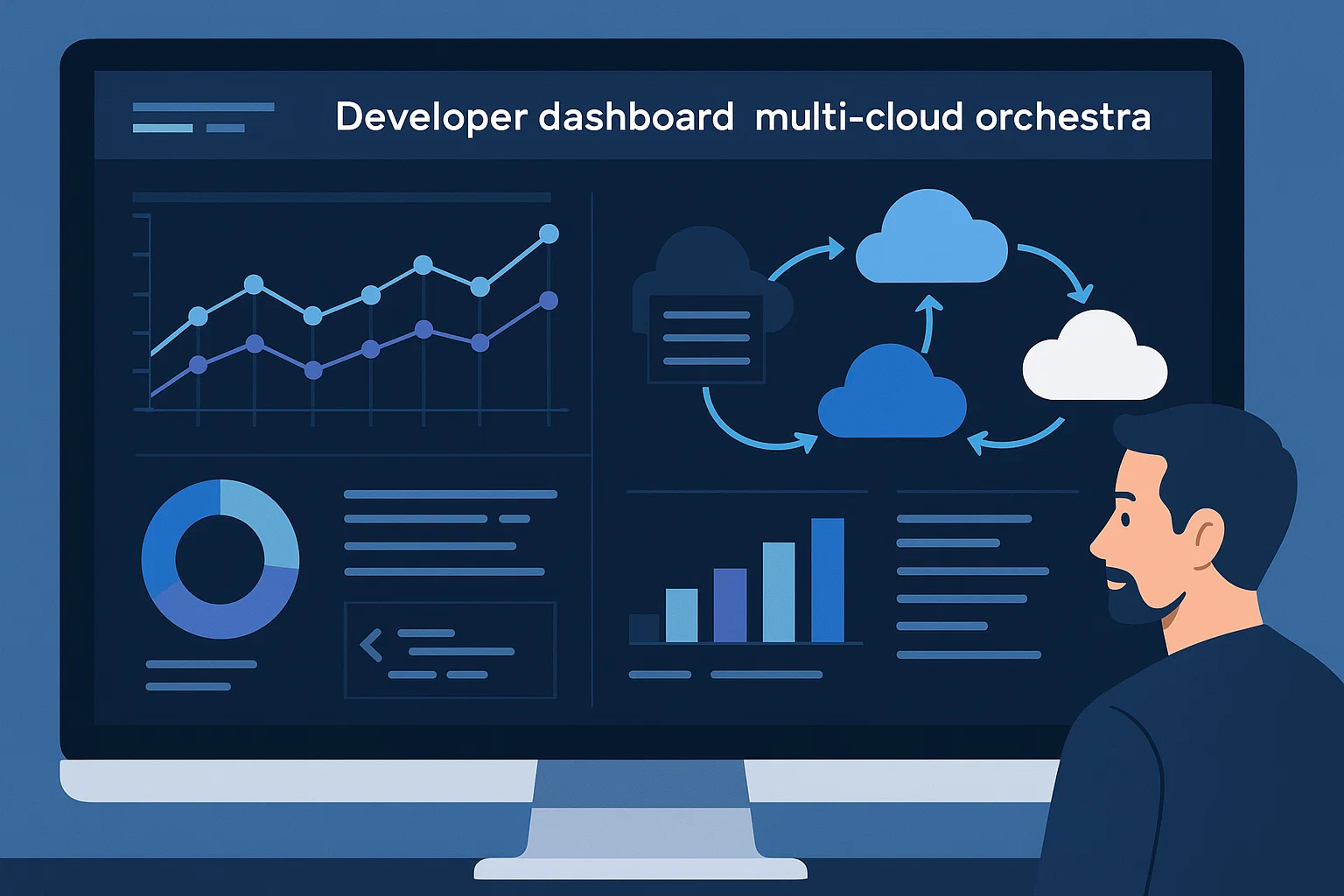
Multi-cloud orchestration has become its own discipline, spawning frameworks such as Pulumi, Spacelift, and HashiCorp’s Nomad.
“By 2026, over 75% of enterprises will adopt a deliberate multi-cloud strategy for risk mitigation and agility.” — IDC FutureScape Report 2025 (idc.com)
While multi-cloud adds resilience, it also multiplies complexity. Developers face new questions: How do you maintain consistent CI/CD pipelines across providers? How do you monitor latency across hybrid environments? The emerging solution lies in abstraction layers—platforms that unify control without compromising flexibility.
Serverless Architecture: From Buzzword to Backbone
“Serverless” no longer means “no servers.” It means no server management burden for developers. The concept—executing functions on demand without manual provisioning—has matured into a production-grade backbone for many modern systems.
Frameworks like AWS Lambda, Azure Functions, and Google Cloud Functions now integrate seamlessly with CI/CD tools, event buses, and API gateways.
Serverless computing fits perfectly with microservices and event-driven design, allowing teams to scale granularly and pay only for actual compute time.
Developers increasingly leverage serverless containers—such as AWS Fargate or Google Cloud Run—bridging the gap between fully managed services and container orchestration.
Serverless isn’t a universal solution. For latency-sensitive or long-running workloads, cost and cold-start times remain considerations. Still, the model’s evolution points toward function-level optimization and intelligent workload placement—a trend developers can’t afford to ignore.
Edge Computing: Bringing the Cloud Closer
Edge computing is the antidote to centralization’s limits. By processing data at or near its source, edge systems dramatically reduce latency and bandwidth consumption.
Developers can now deploy logic directly onto IoT devices, 5G towers, or regional mini-data centers, enabling real-time applications from autonomous vehicles to smart factories.
Cloud providers are rushing to enable this: AWS Outposts, Azure Edge Zones, and Google Distributed Cloud Edge represent the major players’ answers to the growing demand for low-latency computation.
For developers, the shift to edge means designing systems that function under partial connectivity, local caching, and asynchronous synchronization. New frameworks like WebAssembly (Wasm) are emerging as a universal runtime for these edge environments, offering near-native speed and security isolation.
“Edge computing is transforming how developers think about scalability—it’s no longer vertical but spatial.” — IEEE Cloud Computing Journal, 2025 (ieee.org)
AI-Driven Cloud Optimization
Artificial Intelligence is no longer just a workload—it’s becoming the operating principle of the cloud itself.
AI-driven orchestration now predicts scaling needs, manages traffic, and optimizes energy use across massive data centers.
Developers are increasingly interacting with AI-powered DevOps tools like GitHub Copilot for Cloud, Google’s Autopilot mode, and Azure’s Fabric AI, which recommend optimal deployment configurations and even detect inefficiencies automatically.
The implications are profound:
- Predictive autoscaling replaces manual capacity planning.
- Intelligent observability tools identify anomalies before they become outages.
- AI-based load balancing reduces cost and carbon footprint simultaneously.
AI in cloud management marks the shift from reactive to autonomous infrastructure—a world where the cloud not only runs your code but helps you write, deploy, and optimize it.
Security and Compliance: The New Frontlines
With distributed and AI-driven systems come new vulnerabilities. The modern cloud developer must now think in zero-trust architectures, confidential computing, and data governance frameworks.
The rise of confidential VMs (e.g., Google Confidential Computing) and secure enclaves (e.g., AWS Nitro Enclaves) represents a push toward verifiable privacy and cryptographic assurance.
Compliance automation is another growing area. Tools like Open Policy Agent (OPA) and Kyverno allow developers to define and enforce compliance policies programmatically within Kubernetes clusters.
“Security is no longer a separate layer—it’s a built-in property of cloud-native design.” — Cloud Security Alliance Report 2025 (cloudsecurityalliance.org)
For developers, this means embedding security logic into CI/CD pipelines, adopting infrastructure-as-code scanning, and maintaining visibility across fragmented environments.
Developer Impact: Tools, APIs, and Workflows
The expanding complexity of the cloud has reshaped the developer experience.
The new generation of cloud-native developers must juggle observability tools, API gateways, and policy engines while integrating AI-assisted workflows.
The developer stack of 2025 often includes:
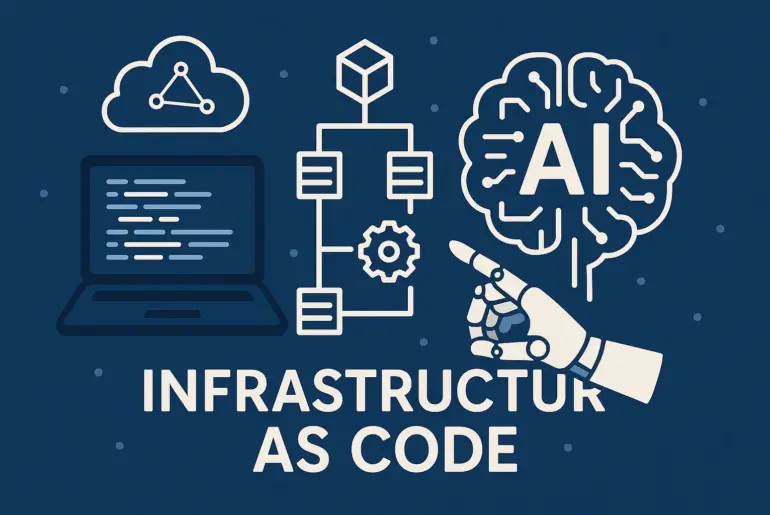
- Infrastructure as Code (IaC): Terraform, Pulumi, Crossplane
- Observability: OpenTelemetry, Grafana, Datadog
- APIs & Integration: GraphQL Federation, gRPC, EventBridge
- Automation: ArgoCD, Flux, GitHub Actions
- AI-assisted debugging: ChatOps, AI copilots, predictive issue detection
This expanding toolkit underscores a simple reality: cloud developers are becoming system architects. The days of writing application logic in isolation are gone; now, every line of code exists within a vast, dynamic ecosystem.
What’s Next: The Convergence of Cloud and Quantum
The next horizon is already visible. Quantum computing—still nascent but accelerating—will integrate with cloud platforms to provide on-demand access to quantum processing units (QPUs).
Amazon Braket, Microsoft Azure Quantum, and IBM Quantum Services are pioneering this hybrid future, where developers can write classical-quantum hybrid applications directly within existing cloud workflows.
The implications are staggering: cloud APIs may soon expose quantum acceleration for optimization, cryptography, and machine learning tasks.
For developers, this means preparing for a paradigm shift: thinking probabilistically, integrating new SDKs, and designing software that offloads certain computations to quantum backends.
Conclusion: Building in the Era of Intelligent Clouds
Cloud technologies are no longer just tools—they’re adaptive ecosystems that respond, learn, and evolve. The innovations dominating 2025—distributed clouds, multi-cloud strategies, serverless backbones, edge computing, and AI-driven orchestration—signal a new kind of relationship between developers and infrastructure.
Developers stand at the core of this transformation. The choices they make—frameworks, architectures, policies—will define how efficiently, ethically, and intelligently the world computes.
The question isn’t whether the cloud will continue to evolve. It’s how developers will evolve with it.
Stay ahead of the curve. Explore open-source frameworks like Crossplane, OPA, and Wasm Edge, experiment with multi-cloud orchestration, and share your findings with the community. The cloud is no longer a service you consume—it’s a medium you help shape.
FAQs
Q1: What are the biggest cloud technology trends in 2025?
A: Multi-cloud adoption, AI-driven orchestration, edge computing, and serverless architecture dominate this year’s cloud evolution.
Q2: How is AI changing cloud computing?
A: AI is optimizing cloud resource allocation, automating scaling decisions, and enabling predictive maintenance—essentially making infrastructure self-managing.
Q3: What should developers learn to stay relevant?
A: Proficiency in Kubernetes, infrastructure as code, edge deployment frameworks, and AI-assisted DevOps will be crucial.
Q4: Is serverless suitable for all workloads?
A: Not yet. Serverless excels for event-driven, stateless workloads but can be inefficient for high-latency or continuous compute tasks.