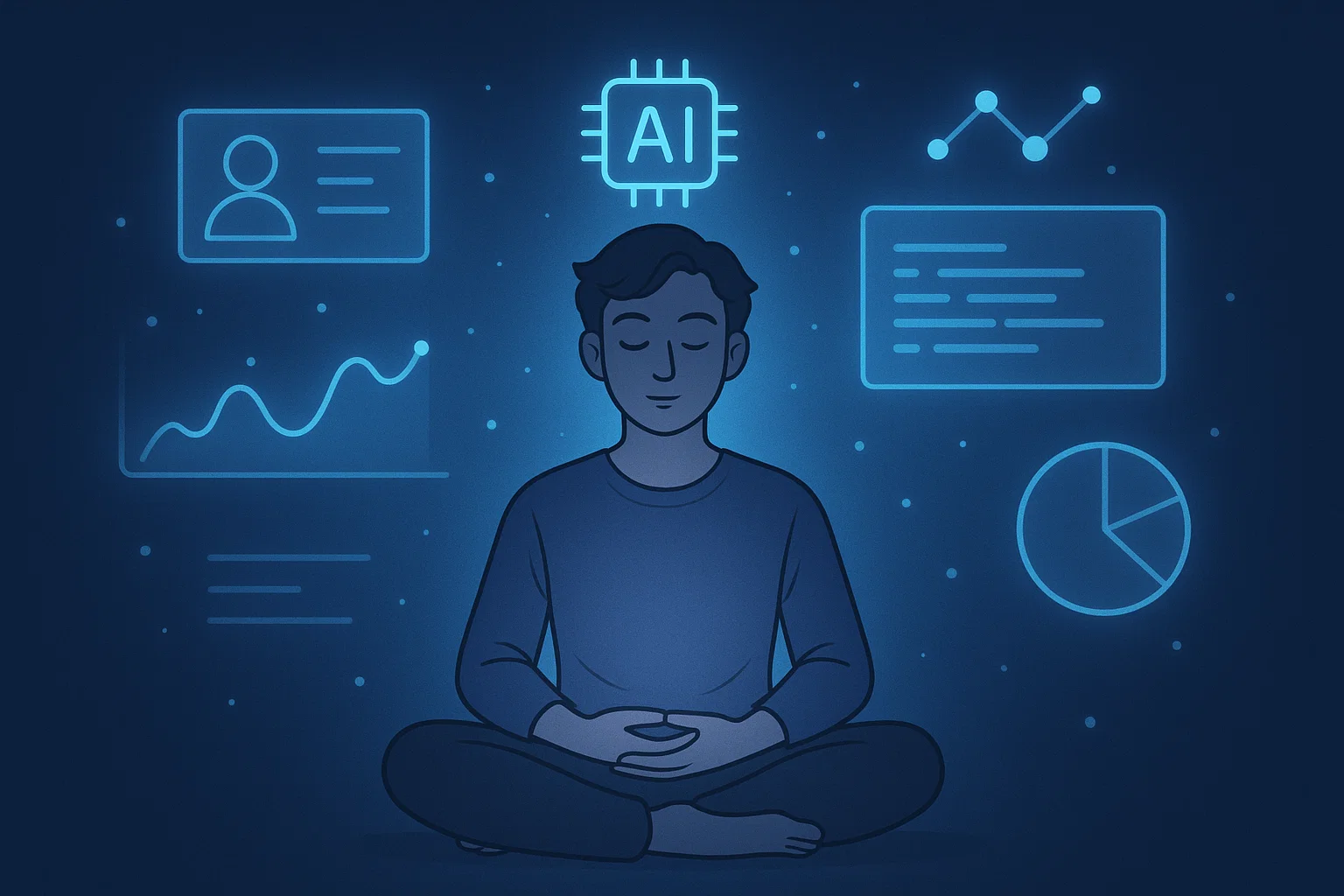
Scope: This article explores how artificial intelligence (AI) is transforming personal growth and self-improvement, offering both opportunities and cautions.
Exclusion: It does not provide technical coding tutorials or investment advice on AI startups.
Introduction: A New Era of Growth
We stand at a curious intersection of history: our drive for self-improvement now intertwines with artificial intelligence. From mindfulness apps that adapt to our stress levels to AI coaches that nudge us toward better habits, machines are no longer just tools—they are becoming companions in our growth journey.
The AI Revolution in Personal Development
AI has already slipped into our everyday rituals of self-help. Fitness trackers suggest optimal rest, language apps adjust to learning speed, and AI-powered platforms like ChatGPT offer reflection and knowledge.
According to a 2023 report by McKinsey, “Generative AI has the potential to automate 60–70% of the time employees spend on routine tasks” (McKinsey, 2023).
That freed-up time can be redirected into creative, emotional, and personal development pursuits.
Opportunities: When Machines Become Mentors
AI can:
- Personalize learning: Adaptive platforms recommend study paths tailored to individual progress.
- Enhance mindfulness: Apps like Headspace and Calm integrate AI-driven recommendations.
- Coach performance: Virtual coaches can give real-time feedback on communication, posture, or productivity.
In essence, AI acts like a mirror polished with data, reflecting not just who we are, but who we might become.
Cautions: Avoiding Over-Reliance
The danger lies in outsourcing growth entirely to algorithms. Blindly following machine-generated advice risks flattening individuality. Overuse of AI tools can even lead to learned helplessness, where we forget how to self-direct without digital prompts. Balance is the key—AI should complement, not replace, self-agency.
The Human Advantage: What Machines Can’t Replace
Despite their brilliance, machines lack:
- Emotional depth: AI can analyze emotions but not truly feel them.
- Ethical judgment: Algorithms operate on data, not values.
- Purpose-seeking: The “why” of life remains uniquely human.
These irreplaceable traits ensure that personal growth is not about mimicking machines but about integrating their strengths with our own.
Practical Steps to Grow with AI
- Set clear goals: Use AI apps as aids, not decision-makers.
- Mix analog and digital: Balance journaling or in-person reflection with AI tools.
- Audit your AI use: Regularly ask: Is this tool helping me grow, or making me dependent?
- Stay curious: Experiment with new AI-driven platforms but filter them through your values.
Conclusion: Flourishing in Symbiosis
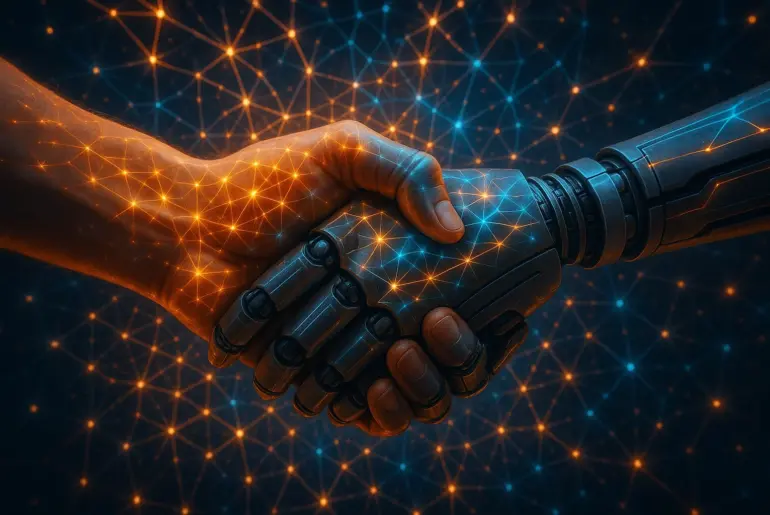
The future of personal growth isn’t about humans versus machines—it’s about partnership. When self and machine work in harmony, AI becomes less a crutch and more a catalyst. By staying mindful of both opportunities and risks, we can use AI not to lose our humanity but to deepen it.
Reflect on one area of your life—learning, health, or creativity—and try integrating an AI tool this week. Then step back and ask: Did it bring me closer to the person I want to become?
FAQs
Q1: Can AI replace a human coach or therapist?
Not fully. AI can simulate guidance, but emotional nuance and empathy remain human strengths.
Q2: What is the biggest benefit of AI in self-development?
Personalization—AI tailors growth strategies to individual needs.
Q3: How do I avoid becoming dependent on AI tools?
Use them as companions, not controllers. Regularly assess your growth without digital input.