Exclusion: This article doesn’t cover highly technical aspects of AI development (like coding or deep research), but instead focuses on how everyday work will be reshaped by collaboration with AI.
Outcome: You’ll learn how AI and humans will grow side by side, not in competition, but in harmony to create new opportunities.
For years, the story of artificial intelligence has been told through the lens of fear: robots replacing workers, machines outsmarting humans, and a looming sense that technology might leave people behind. Yet a more powerful and hopeful narrative is emerging — the age of collaboration, not competition. The future of work isn’t about humans versus AI; it’s about humans with AI, creating possibilities that neither could achieve alone.
A Shift from Replacement to Partnership
When AI first entered mainstream discussions, many headlines screamed about job losses. While some repetitive tasks are indeed being automated, the broader truth is more nuanced. Studies show that AI augments human ability far more often.
Think of it this way: just as calculators didn’t destroy mathematics but empowered humans to tackle higher-level problems, AI tools today are enabling people to move beyond routine tasks and focus on creativity, strategy, and empathy—the areas where humans shine brightest.
Real-World Examples of Human-AI Collaboration
- Healthcare: Doctors now use AI-powered diagnostic tools that analyze scans faster than the human eye. Instead of replacing physicians, these systems act as second opinions, giving doctors more confidence in their decisions.
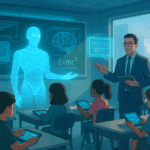
- Education: Teachers employ AI tutors to personalize learning paths for students, freeing up time to focus on mentorship and emotional support.
- Business: Customer service agents are assisted by AI chatbots that handle basic inquiries, allowing humans to tackle complex cases where empathy and judgment are essential.
Each example shows a pattern: AI as an amplifier, not a replacement.
The Human Skills That Will Matter Most
As AI grows smarter, human strengths will become even more valuable. Skills like emotional intelligence, adaptability, and critical thinking will define the future workplace. Creativity—something machines can simulate but not authentically experience—will also take center stage.
“AI can write an essay, but only a human can write a story that makes someone cry.” This distinction highlights the enduring role of human imagination and emotional depth.
Breaking the Myth of Competition
It’s easy to slip into the mindset of competing with machines. But machines don’t dream, and they don’t aspire. Humans bring vision, values, and purpose. AI is the tool that helps make those visions real.
Imagine an architect sketching a rough design, then asking an AI tool to generate dozens of possible variations. Instead of stifling the architect’s creativity, the AI multiplies it. This is the true power of collaboration: AI speeds up execution, while humans set the direction.
The New Workplace Culture
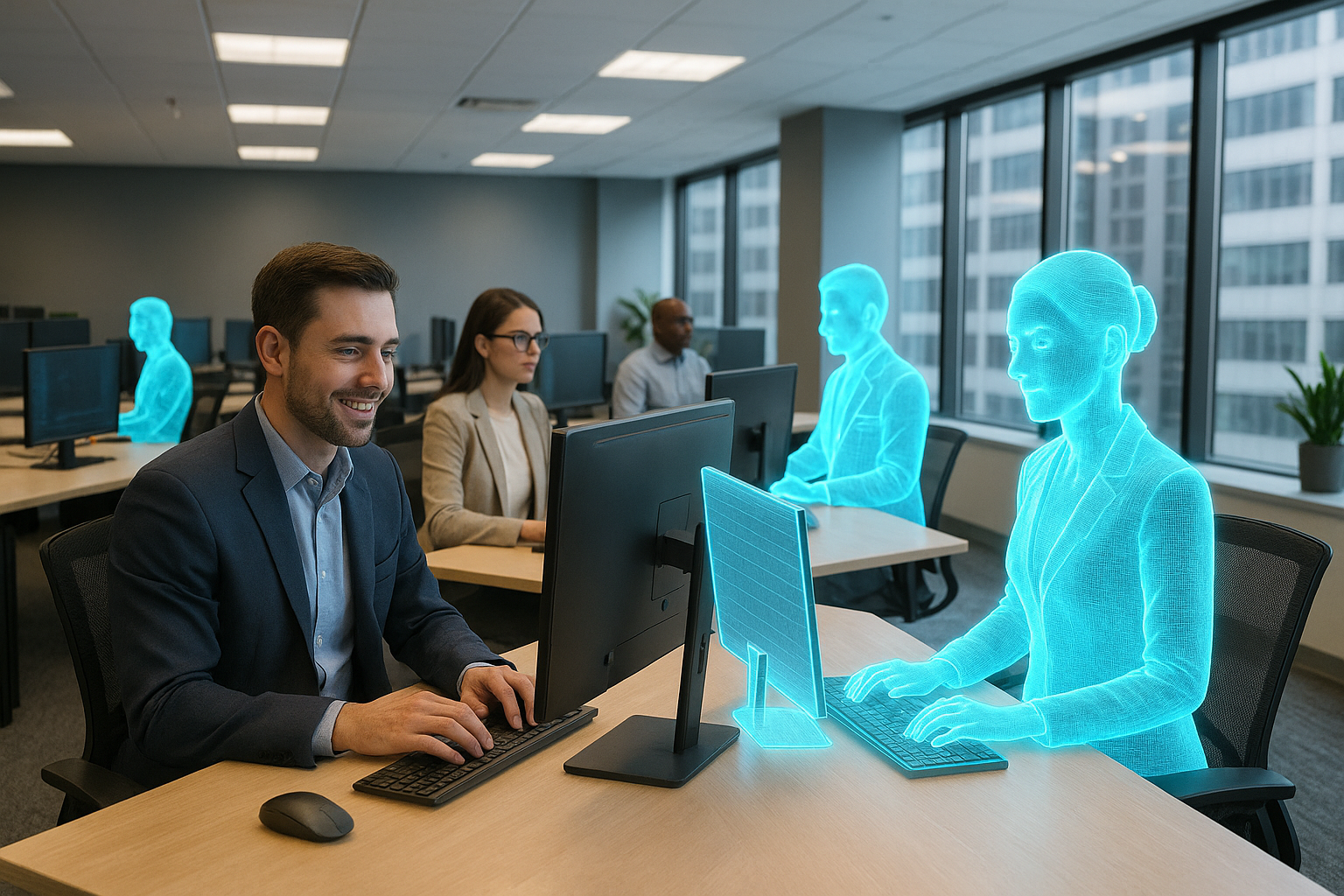
The future workplace will look less like a factory floor and more like a creative studio. Teams will not only include people with different backgrounds and skills but also intelligent systems that handle data-heavy tasks. Success will depend on how well humans and AI “work together,” just as much as how well humans work with one another.
Forward-thinking organizations are already cultivating this mindset by training employees in both technical literacy (how to use AI tools effectively) and human-centric skills (empathy, creativity, leadership). This dual focus ensures that workplaces evolve into hubs of collaboration rather than battlegrounds of obsolescence.
A Call to Embrace, Not Fear
History shows that every technological leap—from the steam engine to the internet—has brought disruption and opportunity. The arrival of AI is no different. Yes, roles will change, and some jobs will disappear. But entirely new careers are being born: AI trainers, digital ethicists, human-AI experience designers.
The key is mindset. Instead of fearing what AI might take away, we can focus on what it enables: more meaningful work, deeper connections, and innovations that were once impossible.
Conclusion
The future of human-AI collaboration in the workplace is not a distant dream; it is unfolding right now. The question is not whether AI will be part of our work lives—it already is. The real challenge is how we choose to work with it.
The most successful future won’t be written by machines or by humans alone, but by both—co-authors of a new story of work.
Take a moment to reflect: What tasks in your daily work could AI help you with, so you can focus on what truly matters? Explore an AI tool this week! Not as a replacement for your skills, but as a partner. The future of work is already here. Step into it with curiosity and courage.
FAQs
Will AI replace all jobs?
No. While some repetitive jobs will be automated, most roles will evolve, and entirely new opportunities will emerge.
Which skills should I develop for the AI future?
Emotional intelligence, creativity, adaptability, and critical thinking will be the most valuable.
Is AI already being used in workplaces today?
Yes, from healthcare to education to business services, AI is already a common collaborator.