Exclusion: This article does not provide a technical manual for AI tools but focuses on their impact on education and student learning habits.
Result: By the end, you will understand how AI is transforming the way students study, the opportunities it creates, and the challenges it poses.
Introduction: When Homework Meets Artificial Intelligence
Homework has always been a cornerstone of education—a way to practice, revise, and strengthen knowledge outside the classroom. Yet, for many students, homework feels repetitive, stressful, or disconnected from their real learning needs. Artificial intelligence (AI) is beginning to rewrite this story. With adaptive learning platforms, AI tutors, and smart study aids, the nightly homework grind is transforming into a more personalized, efficient, and engaging experience.
The Rise of AI Tutors: Personalized Support Beyond the Classroom
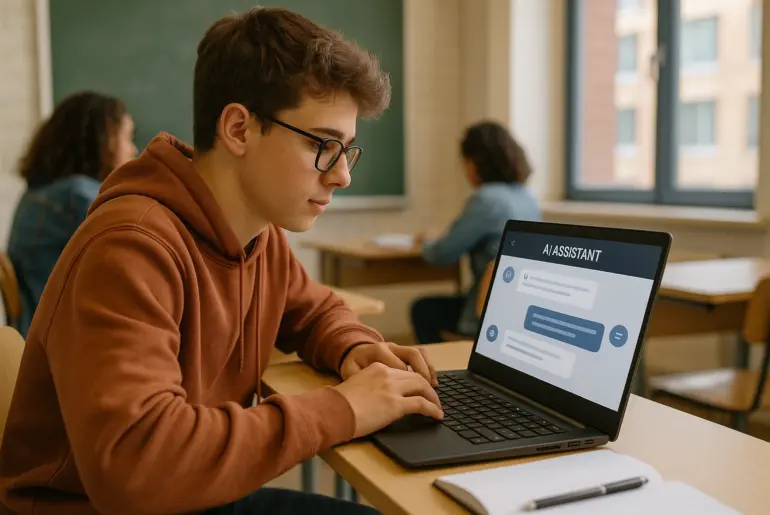
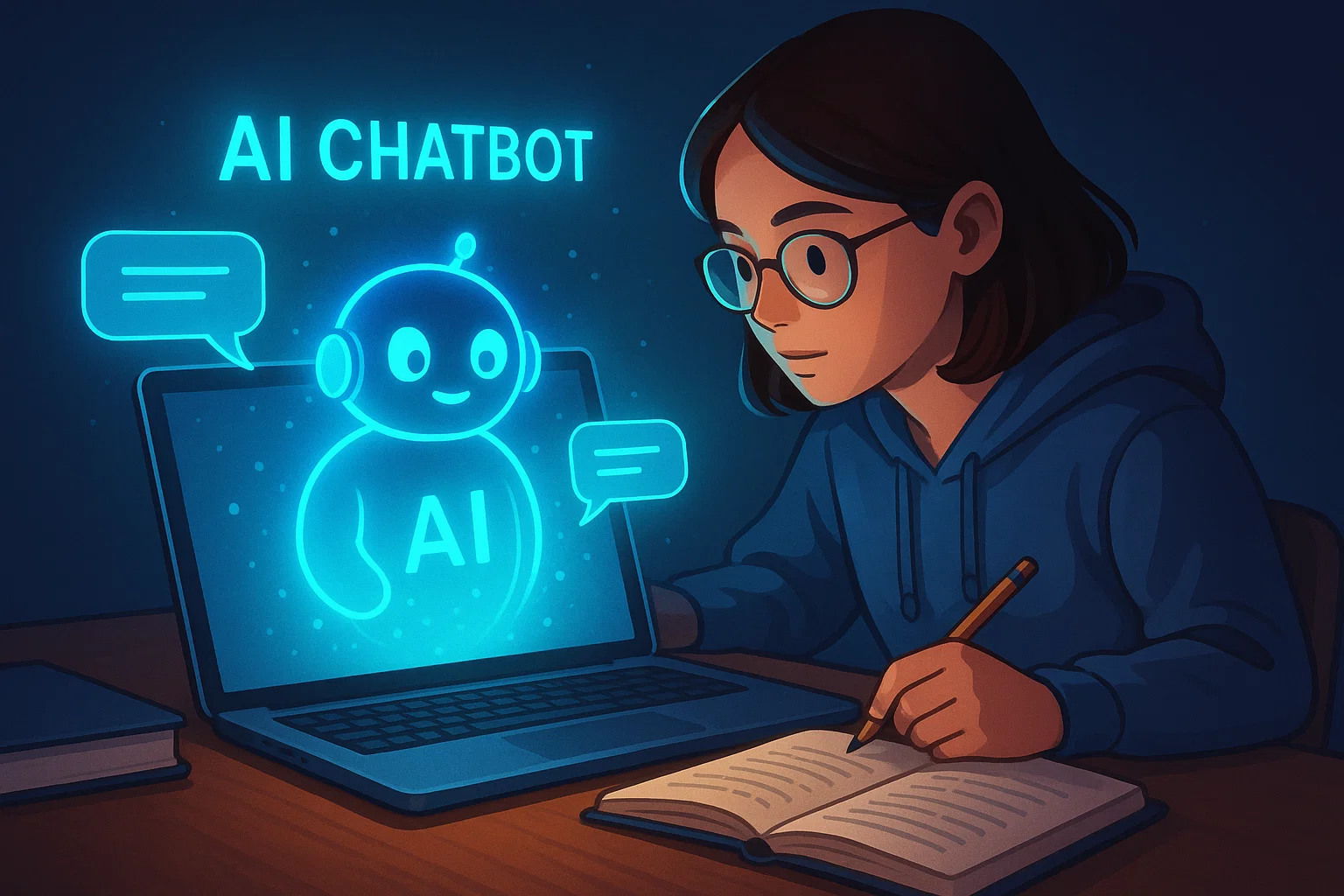
Traditional homework assumes that every student learns at the same pace and in the same way. AI challenges this one-size-fits-all model. Tools like Khan Academy’s Khanmigo and ChatGPT-powered tutoring systems can act as always-available study companions, offering personalized explanations, instant feedback, and interactive practice.
Instead of waiting until the next class to ask a teacher for help, students can clarify doubts immediately. This creates a feedback loop where mistakes are corrected on the spot, reducing frustration and improving retention.
“AI tutors are not replacing teachers but amplifying their reach, ensuring no student feels left behind.” (Source: EdSurge)
Smarter Study Habits: How AI Shapes Learning Routines
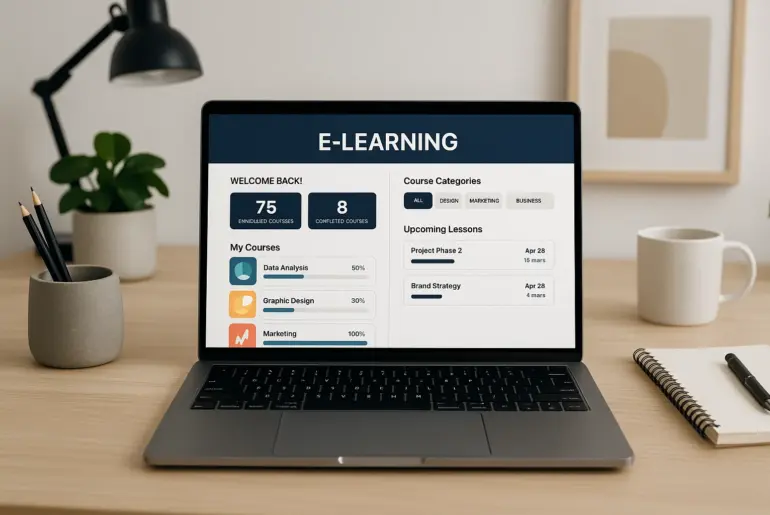
AI doesn’t just answer questions—it can help design entire study routines. Apps like Quizlet with AI-powered flashcards or Duolingo’s adaptive practice system analyze progress and suggest the optimal time to review materials. This approach uses spaced repetition, a scientifically proven method for long-term memory.
Students no longer need to guess how long to study or what to review. Instead, AI helps structure study sessions efficiently, ensuring stronger recall with less wasted time.
The Emotional Side of Homework: Motivation and Stress
Homework is not just cognitive—it’s emotional. Many students struggle with procrastination, anxiety, and a lack of motivation. AI tools are beginning to address these challenges. Some platforms integrate gamification, turning study into a rewarding experience with badges, points, or streaks. Others use natural language processing to offer encouragement and personalized reminders.
“Motivation is not simply about willpower; it’s about having the right environment and tools to sustain effort.” (Source: American Psychological Association)
By reducing stress and making study more interactive, AI could shift the perception of homework from a chore to a self-directed learning opportunity.
Collaboration with Teachers: AI as a Partner in Education
Teachers often face overwhelming workloads: grading assignments, providing feedback, and tailoring lessons to different ability levels. AI can take over repetitive tasks like automatic grading of quizzes or suggesting targeted practice problems. This frees educators to focus on creativity, mentorship, and deeper classroom discussions.
Importantly, teachers remain in control. AI is a support system, not a replacement. The best outcomes happen when human judgment and machine precision work hand in hand.
Challenges and Ethical Concerns
The integration of AI into homework is not without challenges:
- Equity: Not every student has access to reliable internet or devices.
- Over-reliance: If students depend too heavily on AI, they risk bypassing the struggle that builds resilience and critical thinking.
- Privacy: AI systems collect vast amounts of data on student performance, raising questions about how this data is stored and used.
Addressing these concerns requires collaboration between policymakers, educators, parents, and tech developers to ensure AI serves as a tool for empowerment rather than dependency.
The Future of Homework: A Vision Beyond Textbooks
Looking ahead, AI could turn homework into something entirely new:
- Virtual reality classrooms where students practice science experiments safely at home.
- AI-powered writing assistants that teach structure and clarity rather than just correcting grammar.
- Cross-cultural exchange platforms where students collaborate with peers worldwide, guided by AI translation tools.
Homework may no longer be about worksheets but about experiences that blend creativity, problem-solving, and global awareness.
Conclusion: Rethinking the Role of Homework
Homework has long been a symbol of discipline and practice. With artificial intelligence, it’s becoming smarter, more personalized, and even enjoyable. The challenge is to use AI responsibly—balancing convenience with critical thinking, efficiency with creativity. If done right, AI could transform homework from a burden into a gateway to deeper learning.
Whether you’re a student exploring new tools, a parent supporting your child, or an educator seeking innovation, now is the time to experiment with AI-powered study aids. The future of homework is not about doing more—it’s about learning better.
FAQs
Q: Will AI make homework obsolete?
A: Not entirely. Homework will still exist, but AI will make it more personalized, interactive, and efficient.
Q: Can AI replace teachers?
A: No. AI can support teachers by handling repetitive tasks, but human empathy, creativity, and judgment remain irreplaceable.
Q: Is using AI for homework cheating?
A: It depends on how it’s used. Copying answers is cheating, but using AI as a tutor or guide is like having an always-available study partner.
Q: Are AI tools affordable for everyone?
A: Some AI resources are free, but access still depends on internet availability and devices, which can widen inequality.