This article explores how AI is transforming education, from personalized learning to global accessibility. It does not cover detailed technical programming aspects.
Introduction
Education has always evolved alongside technology—from chalkboards to projectors, from desktop computers to online classrooms. Yet, artificial intelligence (AI) is not just the next tool in line; it is redefining what education can mean in the 21st century. By enabling personalization, breaking barriers of access, and raising new ethical questions, AI is reshaping the future of learning itself.
The Rise of AI in Education
Artificial Intelligence is no longer confined to science fiction. In classrooms and homes around the world, AI-powered tools—from adaptive learning platforms to automated grading systems—are already making education more efficient.
According to UNESCO, nearly 50% of students worldwide experienced some form of AI-driven digital learning during the COVID-19 pandemic (UNESCO, 2021).
Personalized Learning Journeys
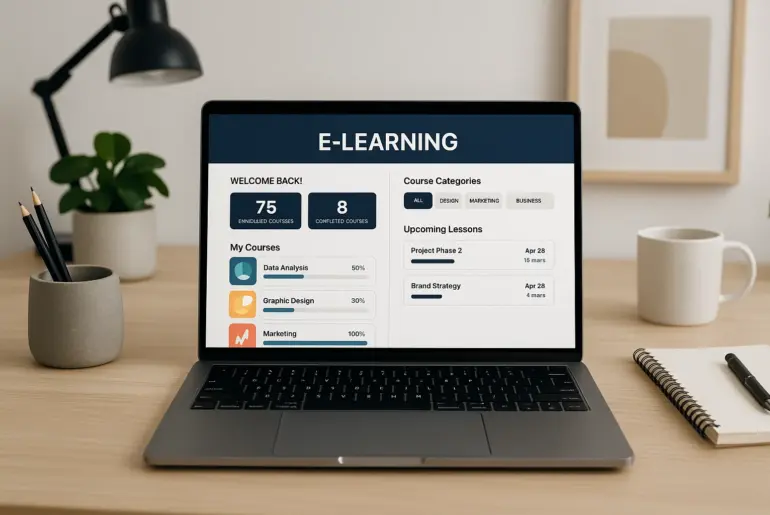
One of AI’s most powerful contributions is personalization. Traditional classrooms often struggle with one-size-fits-all teaching. AI changes this by analyzing how each student learns best, tailoring lessons to individual strengths and weaknesses. Platforms like Khan Academy’s AI tutor or Duolingo’s adaptive algorithms provide learning paths that feel custom-made. This makes education more inclusive, ensuring that slower learners receive support while advanced students are continuously challenged.
AI Tutors and Smart Classrooms
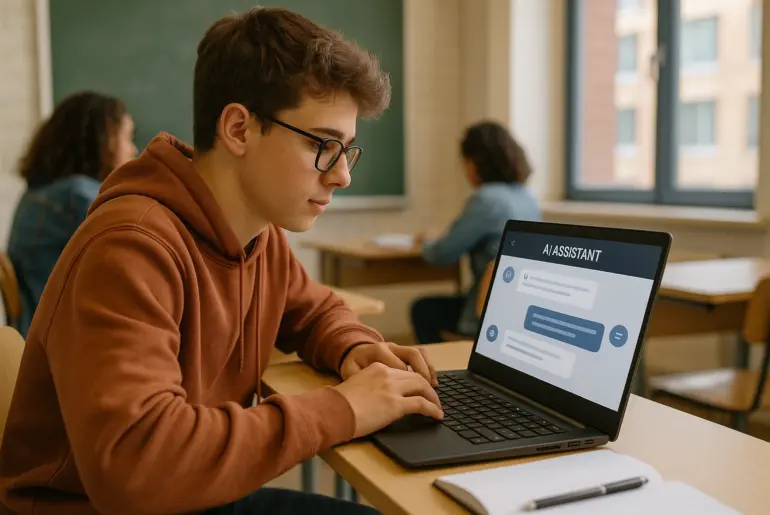
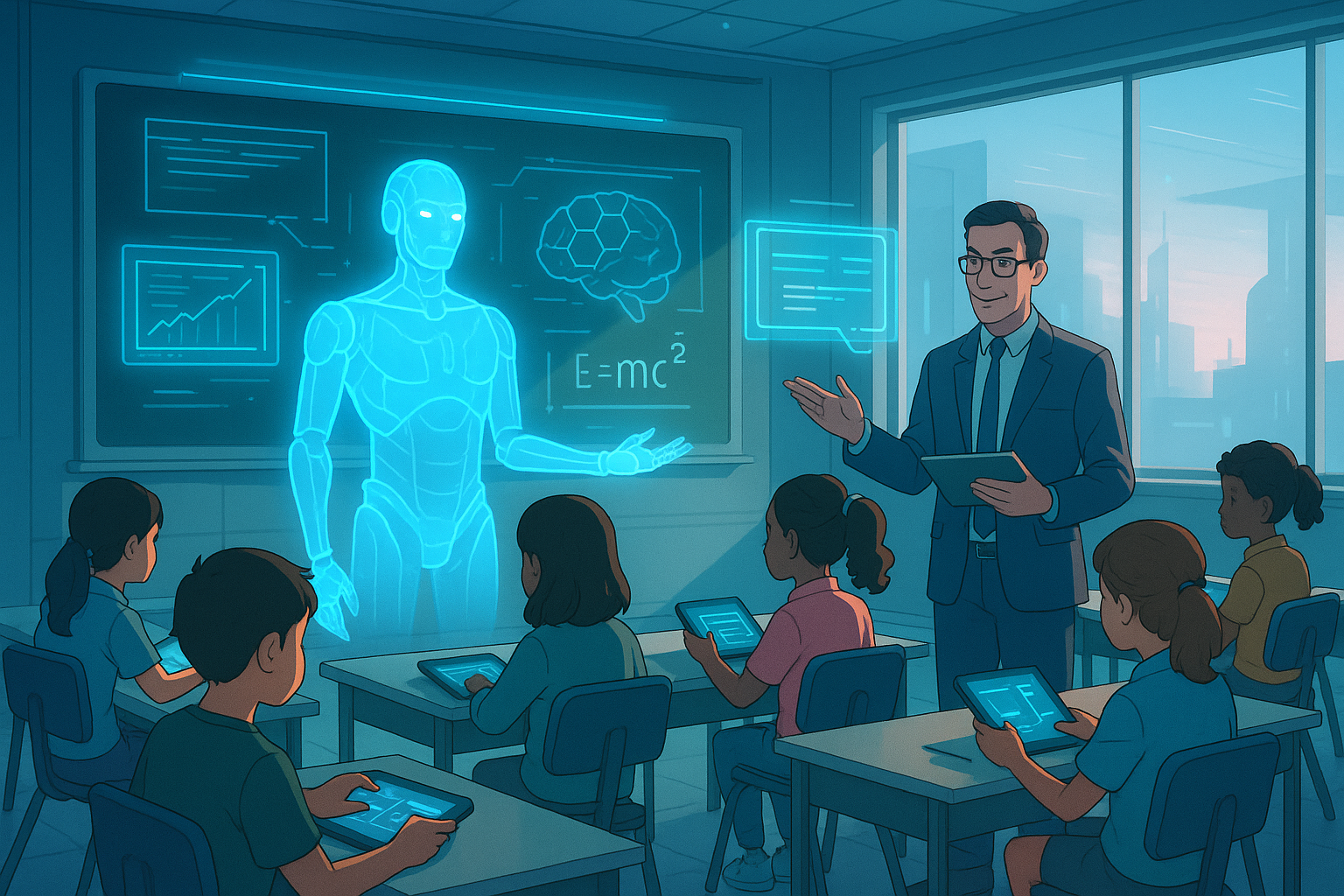
Imagine walking into a classroom where AI assistants help answer student questions instantly, while the teacher focuses on higher-level problem-solving and mentoring. AI tutors, powered by natural language processing, can provide round-the-clock support. Tools like ChatGPT, for example, are being tested as interactive study companions, helping learners draft essays, solve math problems, or explore new concepts.
Smart classrooms also integrate sensors and data analytics to monitor engagement, suggesting when students need breaks or alternative teaching strategies. This enhances—not replaces—the role of teachers, who remain vital as mentors and emotional guides.
Bridging Global Education Gaps
AI can help close these gaps by offering scalable, cost-effective solutions. For example, language translation powered by AI enables access to learning materials across borders. AI-driven mobile learning apps provide quality lessons in regions lacking trained teachers. In refugee camps, projects using AI-enabled tablets have already shown promise in delivering literacy and numeracy programs.
Ethical and Social Challenges
As with all technological shifts, AI in education comes with risks. Data privacy is a major concern—tracking student performance means collecting sensitive information. Bias is another issue: if the algorithms are trained on unbalanced data, they may reinforce inequalities instead of reducing them. There is also the danger of over-reliance, where students might depend too heavily on AI tutors and lose critical thinking skills. Policymakers, educators, and technologists must work together to ensure that AI enhances human learning rather than undermining it.
The Future of Lifelong Learning
AI’s impact goes beyond schools and universities. In a world where jobs evolve rapidly, lifelong learning is essential. AI can provide continuous, adaptive training for professionals, ensuring skills remain relevant. From corporate upskilling programs to personal learning apps, AI supports a culture where learning never stops. This is particularly vital as automation reshapes the workforce.
Conclusion
Artificial intelligence is not simply a tool—it is a catalyst for reimagining education. From personalized journeys to global access, AI carries the potential to make learning more effective, inclusive, and lifelong. Yet this future depends on how we design, regulate, and use it. Teachers, policymakers, parents, and learners all have a role to play in shaping an education system that benefits from AI without losing its human heart.
Explore AI-powered learning tools today, but stay critical. Ask how they protect privacy, address bias, and empower teachers. Education’s future is being written now—your voice matters in shaping it.
FAQs
Q1: Will AI replace teachers?
No. AI is designed to support and enhance teaching, not replace the human connection and mentorship teachers provide.
Q2: Is AI in education safe?
It depends on how it’s implemented. Responsible AI use requires strong data privacy and ethical standards.
Q3: Can AI help in rural or underdeveloped areas?
Yes. AI-powered mobile learning and translation tools can bring quality education to underserved communities worldwide.