Exclusions: This article is not financial advice. It’s a visionary exploration of AI and crypto trends.
Outcome: Readers will understand how AI and blockchain are merging to shape the future of money and digital assets.
Introduction: The Convergence of AI and Crypto
Cryptocurrency and AI are two of the most disruptive technologies of the 21st century. Separately, they’ve reshaped industries. Together, they might rewrite the foundations of money, markets, and trust. AI offers predictive intelligence, automation, and optimization, while blockchain provides decentralization, transparency, and security. Their convergence could birth a new era of smart finance.
Smart Trading: AI-Powered Strategies in Action
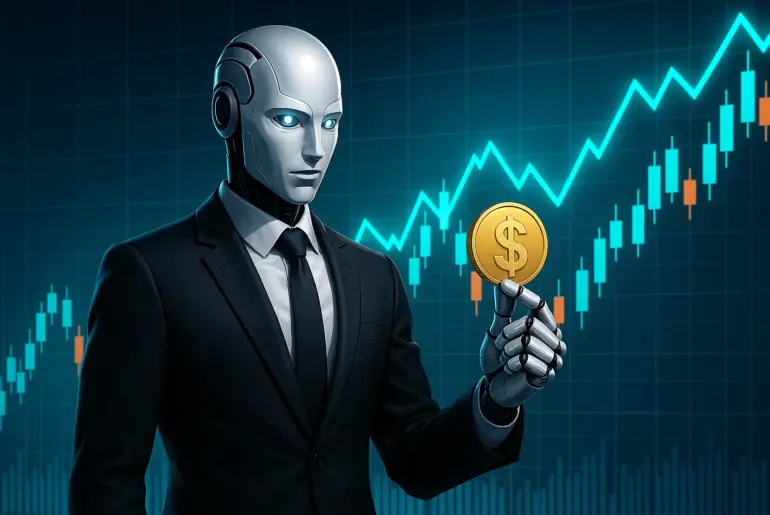
Crypto markets are notoriously volatile, making them fertile ground for algorithmic trading. AI-driven bots are no longer simple rule-based systems; they’re adaptive, learning from vast datasets in real time. Neural networks can detect patterns humans miss, spotting signals across thousands of trading pairs simultaneously.
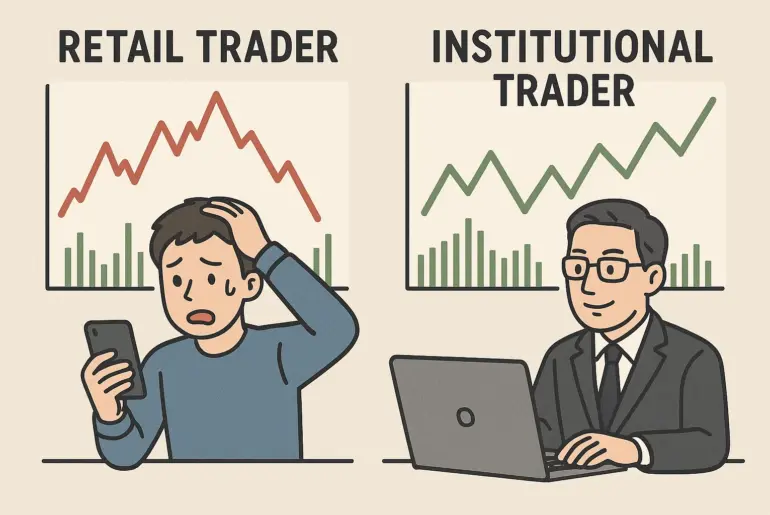
For instance, firms like Numerai and APEX exploit crowdsourced AI models to predict market behavior, while retail platforms integrate AI assistants for portfolio management. This automation can democratize access to sophisticated trading strategies once reserved for hedge funds.
Blockchain + AI: Beyond Markets
The marriage of AI and blockchain is not confined to trading. AI can optimize blockchain operations—improving scalability, predicting network congestion, and reducing energy consumption. Conversely, blockchain offers AI a transparent, verifiable data layer, reducing bias and enabling decentralized training models.
Imagine decentralized AI marketplaces where users exchange data and algorithms without centralized control. Projects like SingularityNET are pioneering this frontier, suggesting a future where intelligence itself is tokenized and traded.
Decentralized Finance (DeFi) and AI Synergies
DeFi protocols already automate lending, borrowing, and liquidity provision through smart contracts. Adding AI to the mix enables dynamic interest rates, automated risk scoring, and predictive liquidity management. For example, AI could instantly adjust collateral requirements based on real-time market conditions, reducing liquidation risks.
This fusion may bring DeFi closer to mass adoption by reducing complexity for end users. Imagine a DeFi wallet that behaves like a financial autopilot—allocating, hedging, and rebalancing in the background, with the user only setting goals.
The Role of AI in Crypto Security
Crypto’s greatest Achilles’ heel has been hacks, scams, and fraud. AI can detect suspicious wallet behavior, flagging anomalies before damage spreads. Machine learning models already help exchanges identify wash trading and phishing attempts. As cybercriminals adopt AI tools, defensive systems must evolve in tandem.
Moreover, AI-driven biometric verification could strengthen wallet security. Imagine decentralized ID systems where AI confirms identity without centralized data storage—an elegant blend of privacy and trust.
Risks, Challenges, and Ethical Questions
The fusion of AI and crypto is not without risks. Algorithmic black boxes can obscure decision-making, raising accountability issues. Biases in training data could lead to discriminatory lending or skewed credit scoring in AI-driven DeFi.
Market manipulation is another concern. AI could be weaponized to exploit microsecond inefficiencies, destabilizing already fragile crypto markets. Regulators face the Herculean task of balancing innovation with safeguards.
And then there’s the existential question: If AI agents control capital autonomously, who is truly in charge of the money?
The Visionary Future: AI-Driven Financial Ecosystems
Looking ahead, the convergence of AI and crypto could yield autonomous economies. Imagine DAOs (Decentralized Autonomous Organizations) governed by AI agents, allocating capital with superhuman efficiency. Entire financial ecosystems could operate without human intermediaries, fueled by algorithmic trust.
This is not a utopia guaranteed—it’s a possibility emerging from today’s experiments. The future of money may be less about centralized banks and more about decentralized intelligence directing value flows globally.
Conclusion: The Road Ahead
AI and crypto are not just technologies—they are philosophies about how power, trust, and value should be distributed. As they intertwine, we may be witnessing the birth of a financial system that’s both smarter and freer. Whether this system empowers the many or serves the few will depend on how we design, regulate, and adopt it.
Stay curious, keep learning, and if you’re exploring crypto, think not just about coins and tokens but about the intelligence that will increasingly guide them.
FAQs
Q1: Can AI really predict crypto markets accurately?
AI can identify hidden patterns and trends, but no system can predict markets with certainty. It improves odds, not guarantees.
Q2: How are AI and blockchain connected?
AI benefits from blockchain’s transparency, while blockchain benefits from AI’s optimization and predictive capabilities.
Q3: Are AI-driven DeFi protocols safe?
They enhance efficiency but also introduce risks of algorithmic bias and smart contract vulnerabilities.
Q4: Will AI replace human traders?
AI will likely dominate routine trading but humans will still play roles in strategy, regulation, and oversight.